birth chart system
Western Astrology
Western astrology reads the positions of the sun, moon, and planets at the exact moment you were born, mapped onto twelve zodiac signs and twelve houses. Your sun sign is one placement among many. The full chart describes patterns in how you express yourself, process feelings, and meet the world.
where it comes from
It grew out of Babylonian sky records more than two thousand years ago, passed through Greek and Roman hands, and uses the tropical zodiac tied to the seasons. The version most people meet in an app is a small slice of a much older practice.
what it reads in you
✦your sun, moon, and rising signs, and what each one governs
✦all ten planet placements across the twelve houses
✦the aspects, the angles planets make to each other in your chart
is my sun sign the whole story?
no. the sun sign is one placement out of dozens in a full chart. your moon and rising signs often explain the parts of you a sun-sign horoscope keeps getting wrong.
do i need my exact birth time?
for your rising sign and houses, yes. without a birth time you still get your sun, moon within a range, and every planet placement.
sidereal birth chart system
Vedic Astrology
Vedic astrology is an Indian birth chart system that reads your planets through the sidereal zodiac, nakshatras, houses, and timing cycles called dashas. It often gives more weight to the moon and life timing than a Western sun sign. WooWoogle uses it as tradition, not proof that events must happen.
where it comes from
Vedic astrology, also called Jyotisha, developed in India through astronomy, ritual calendars, and Sanskrit astrological texts. Classical sources and later practice use rashis, nakshatras, dashas, and divisional charts, with many schools differing in method.
what it reads in you
✦your sidereal sun, moon, rising sign, and nakshatra
✦your planetary periods, especially the dasha timing cycle
✦relationship and life themes shown through houses and chart divisions
why is my vedic sign different from my western sign?
Vedic astrology usually uses the sidereal zodiac, tied to fixed stars. Western astrology usually uses the tropical zodiac, tied to seasons, so many people shift back about one sign.
is vedic astrology more accurate?
not in a scientific sense. it is a different traditional system with different tools, especially moon signs, nakshatras, and dashas. some people find that language more useful.
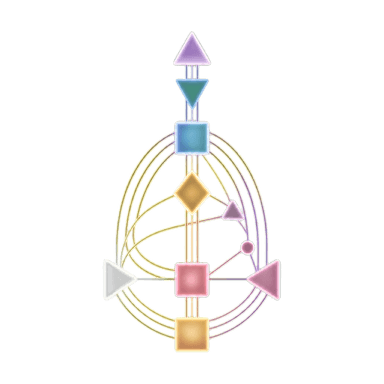
birth data bodygraph system
Human Design
Human Design is a birth data system that turns your time, date, and place of birth into a BodyGraph, with type, strategy, authority, profile, gates, and centers. It describes how you tend to make decisions and exchange energy with others. Treat it as a reflective map, not a scientific diagnosis.
where it comes from
Human Design was created by Ra Uru Hu, born Alan Robert Krakower, after he described receiving channeled material in 1987. The system blends astrology, the I Ching, Kabbalah, chakra language, and modern bodygraph mechanics.
what it reads in you
✦your type, strategy, and authority for decision-making
✦your profile lines and the role pattern people often meet first
✦defined and open centers, where you feel consistent or conditioned
do i need my exact birth time?
yes, if you want the most accurate BodyGraph. small time changes can shift gates, lines, profile, and sometimes authority, so an approximate time should be treated as approximate.
is human design scientifically proven?
no. it is a channeled and symbolic system, not a peer-reviewed science. many people still use it as clear language for choices, energy, and relationship dynamics.
number symbolism system
Numerology
Numerology is a number symbolism system that reads dates and names as patterns, especially your Life Path, Expression, Soul Urge, Birthday, and Personal Year numbers. It can show the cycle you are in and the motives you return to. It is a lens for reflection, not measured evidence.
where it comes from
Modern Western numerology draws from Greek number mysticism associated with Pythagoras and from later esoteric writing. The common Pythagorean name method was organized by early twentieth century teachers such as L. Dow Balliett and later numerology authors.
what it reads in you
✦your Life Path number from your birth date
✦your name numbers, including Expression and Soul Urge
✦your Personal Year, the cycle your current year is moving through
why do calculators give different life path numbers?
methods differ. some reduce the full date at once, while others reduce the month, day, and year first. master number rules also change the display.
are master numbers better?
no. numbers like 11, 22, and 33 are often treated as intensified patterns, not higher status. for compatibility, they still connect back to their root numbers.
calendar day-sign system
Maya Sacred Calendar
Maya Sacred Calendar is a 260-day calendar system that reads your birth date through one of 20 nawales and one of 13 tones. In WooWoogle, it points to rhythm, service, temperament, and the kind of day energy you carry. Birth time is not usually needed for this layer.
where it comes from
The 260-day Tzolk'in, called Cholq'ij in K'iche' contexts, is a living Mesoamerican calendar with roots far older than colonial records. The local research favors K'iche' names, the GMT 584283 correlation, and a clear distinction from modern Dreamspell systems.
what it reads in you
✦your nawal, the day sign connected to your birth date
✦your tone from the 13-step rhythm of the calendar
✦the service, temperament, and timing themes your day sign carries
is this the same as dreamspell?
no. WooWoogle follows the traditional 260-day Maya calendar language used in K'iche' contexts, and keeps modern Dreamspell material separate.
do i need my birth time?
usually no. the nawal and tone are calculated from the calendar day. if you were born near midnight, location and calendar conversion can matter.
zodiac calendar system
Chinese Zodiac
Chinese Zodiac is a calendar system that reads your birth year through one of 12 animals and a repeating five-element cycle. It places your identity inside a 60-year rhythm rather than a monthly sun sign. WooWoogle uses it for broad temperament, timing, and compatibility themes, not fixed fate.
where it comes from
The zodiac grew from Chinese calendrical systems using the twelve Earthly Branches and the ten Heavenly Stems. The 12 animal cycle and five elements became part of a larger 60-year calendar used across East Asian cultures.
what it reads in you
✦your birth-year animal and its broad temperament pattern
✦your element, such as wood, fire, earth, metal, or water
✦compatibility themes from animal groups, clashes, and yearly timing
does chinese zodiac use lunar new year?
yes. the zodiac year does not start on January 1. if you were born in January or February, your animal may belong to the previous lunar year.
is the year animal the whole chart?
no. the popular zodiac focuses on the year animal. deeper Chinese systems, such as BaZi, also read month, day, hour, stems, and branches.
personality, self-report
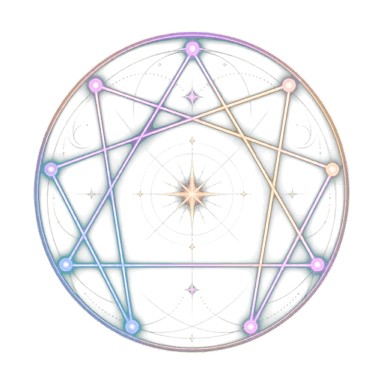
Enneagram
Enneagram is a nine-type personality system that reads the core motive, fear, and defense pattern underneath your behavior. It is less about what you do and more about why you keep doing it. WooWoogle uses it to name relationship loops, growth edges, and likely stress reactions.
where it comes from
The enneagram symbol was taught by George Gurdjieff in the early twentieth century. The nine personality types were developed later by Oscar Ichazo and Claudio Naranjo, then expanded by modern teachers and authors.
what it reads in you
✦your core type and the motive that keeps repeating
✦your wing, stress movement, and growth direction
✦the defense pattern that shows up in love, work, and conflict
is enneagram compatibility fixed?
no. health level and self-awareness matter more than type alone. some pairings have predictable friction, but no type pairing is automatically doomed.
how is enneagram different from mbti?
MBTI describes preferred ways of taking in information and deciding. Enneagram focuses on motive, fear, desire, and the pattern you defend when stressed.
personality, self-report
MBTI
MBTI is a self-report personality framework that groups preferences into 16 types using four letter pairs: E or I, S or N, T or F, and J or P. It describes how your mind tends to take in information, decide, organize, and recover energy. It is useful language, not a clinical measure.
where it comes from
Katharine Cook Briggs and Isabel Briggs Myers developed the Myers-Briggs Type Indicator in the twentieth century. They built it from the 1921 theory of Carl Jung and later adapted it into a practical questionnaire.
what it reads in you
✦your four-letter type and the preferences behind each letter
✦how you gather information, make decisions, and recover energy
✦communication and compatibility patterns with other types
can my mbti type change?
your answers can change over time, and retests are not perfectly stable. use the result as a useful snapshot of preferences, not a permanent identity.
is mbti scientifically proven?
it is widely used but debated. it can help with language and self-reflection, but it is not a clinical test and should not be used to judge ability.
psychology, self-report
Attachment Style
Attachment style describes the pattern you fall into when you get close to people: secure, anxious, avoidant, or a mix. It comes from decades of psychology research on how early bonds shape adult relationships. Knowing yours explains a lot about how you fight, reach out, and pull away.
where it comes from
Attachment theory began with John Bowlby and Mary Ainsworth in the mid twentieth century and was extended to adult romantic relationships by researchers in the 1980s. It is one of the most studied frameworks in relationship psychology.
what it reads in you
✦whether you lean secure, anxious, avoidant, or fearful-avoidant
✦what actually calms you down when a relationship feels shaky
✦the pairings that tend to work for you, and the trap ones
can my attachment style change?
yes. research calls it earned security. it shifts slowly, through safe relationships and honest work, not overnight.
is anxious plus avoidant really a bad match?
it is the most common trap pairing. each person triggers exactly what the other fears. it can work, but only when both people see the loop and work on it deliberately.

relationship, self-report
Love Languages
Love Languages is a relationship framework that names five common ways people give and receive care: words, time, help, touch, and gifts. Your result points to the kind of proof your heart notices first. Matching languages can feel easy, but willingness to translate matters more.
where it comes from
Gary Chapman popularized the five love languages in his 1992 relationship book. The framework became common in counseling, dating, and friendship content, though its research support is weaker than attachment theory.
what it reads in you
✦which kind of care you notice first
✦how you tend to show love when nobody coaches you
✦where a partner or friend may need translation instead of blame
do partners need the same love language?
no. same-language pairs may feel easy, but different-language pairs can work well when both people learn what care looks like to the other person.
is love language theory research-backed?
not strongly. it is popular and useful for conversation, but the evidence is mixed. WooWoogle labels it as self-report, not psychology proof.

body + energy tradition
Ayurveda Dosha
Ayurveda Dosha is a self-report layer based on the Ayurvedic idea that vata, pitta, and kapha describe patterns in body, mood, pace, and balance. WooWoogle reads your dominant and secondary dosha as temperament language. It is not medical advice, diet guidance, or a diagnosis.
where it comes from
Ayurveda is a South Asian healing tradition with classical Sanskrit texts and many living lineages. WooWoogle uses only the dosha self-report lens for personality and relationship language, not the medical or diet side of Ayurveda.
what it reads in you
✦whether vata, pitta, or kapha is most dominant for you
✦your secondary dosha and the blend it creates
✦your pace, stress pattern, and balance needs in relationships
is a dosha quiz medical advice?
no. WooWoogle uses doshas as a self-reflection and compatibility layer. it does not diagnose, treat, or prescribe diet or health changes.
can two different doshas be compatible?
yes. no dosha pair is incompatible. different doshas can balance each other, while similar doshas may understand each other but amplify the same stress pattern.
money behavior, self-report
Money Archetype
Money Archetype is a self-report framework for the safety pattern that shows up around earning, saving, spending, receiving, and risk. It reads how you behave when resources feel scarce or abundant. WooWoogle uses it for conversation, relationship, and business fit, not financial advice.
where it comes from
This is a modern coaching and money mindset framework, not an old esoteric tradition. Several eight-archetype systems were popularized by coaches including Kendall SummerHawk and later money mindset teachers, while WooWoogle uses generic money archetype language.
what it reads in you
✦whether safety, status, freedom, generosity, or control drives money choices
✦where you overgive, overspend, overprotect, or avoid receiving
✦how your pattern works in romance, business, and shared resources
is this financial advice?
no. it is a conversation tool about money behavior and safety patterns. it does not tell you how to invest, save, borrow, or make financial decisions.
can i have more than one money archetype?
yes. most people relate to a blend. WooWoogle reads the strongest pattern first, then looks at the secondary pattern that changes how it acts.

intention style, self-report
Manifestation Style
Manifestation Style is a self-report framework for how you focus intention, attention, emotion, and action when you want something to become real. It does not promise results or replace practical work. WooWoogle uses it to show whether you tend to dream, feel, act, or allow first.
where it comes from
Modern manifestation language draws from New Thought, positive thinking, and contemporary coaching culture. WooWoogle keeps the focus on style, attention, and follow-through, not on promises that a method can force reality.
what it reads in you
✦whether you lead with vision, feeling, action, or trust
✦which intention practices may feel natural or forced
✦where desire turns into pressure, avoidance, or practical movement
does manifestation guarantee outcomes?
no. WooWoogle treats manifestation as intention, attention, and action style. it cannot promise that writing, visualizing, or focusing will make a result happen.
what if common methods do not work for me?
that may be a style mismatch. some people need action, some need feeling, some need clarity, and some need less pressure before anything can move.
communication, self-report
Communication Style
Communication Style is a self-report framework that reads how you tend to speak, listen, avoid, press, or repair when truth has to move between people. It commonly looks at passive, aggressive, passive-aggressive, and assertive patterns. WooWoogle uses it across love, business, and friendship.
where it comes from
Modern communication-style frameworks come from counseling, assertiveness training, workplace education, and conflict-resolution writing. The four-style model is common because it is easy to recognize, not because it is one single validated instrument.
what it reads in you
✦whether you tend to avoid, soften, push, imply, or state directly
✦what happens to your voice when conflict starts
✦how your style lands differently in romance, work, and friendship
is assertive communication always best?
assertive communication is usually the clearest target because it respects both people. tone, safety, culture, and timing still matter.
can my communication style change?
yes. styles are learned patterns, not permanent types. practice, feedback, and safer relationships can shift how directly you speak and repair.
shadow work, self-report
Shadow Pattern
Shadow Pattern is a self-report framework for the defense that appears before the softer truth underneath it. It names patterns like pleasing, controlling, avoiding, rescuing, or rebelling when shame, fear, or unmet needs get touched. WooWoogle treats it as reflection, not a diagnosis or therapy.
where it comes from
The shadow comes from the early twentieth century analytical psychology of Carl Jung, where it named disowned parts of the psyche. Modern shadow work blends Jungian language with journaling, coaching, and relationship reflection.
what it reads in you
✦the defense you reach for before you know you are hurt
✦the trigger underneath pleasing, control, avoidance, rebellion, or rescue
✦what needs to be owned gently instead of acted out on someone else
is my shadow pattern bad?
no. it is a protective strategy that may now create problems. the point is awareness and choice, not shame.
is shadow work therapy?
not here. WooWoogle uses a light self-reflection lens. if shadow work brings up trauma, distress, or unsafe impulses, a qualified professional is the right support.
body state, self-report
Somatic Nervous System
Somatic Nervous System is a self-report layer for the body state you tend to move from under stress, such as settled, mobilized, or shut down. It reads regulation style and capacity, not a medical condition. WooWoogle uses it to understand co-regulation and relationship loops.
where it comes from
This layer draws from somatic therapy language, the window of tolerance popularized by Dan Siegel, and polyvagal theory from Stephen Porges. Polyvagal framing is clinically useful to many practitioners, but it is also debated, so WooWoogle keeps it clearly non-diagnostic.
what it reads in you
✦whether you lean settled, activated, collapsed, or mixed under stress
✦what helps your body return to connection after conflict
✦how your state pairs with another person in love, work, or friendship
is this a nervous system diagnosis?
no. it is a self-report relationship lens. it does not diagnose trauma, anxiety, depression, dysregulation, or any medical condition.
are sympathetic and dorsal partners complementary?
not by default. that pairing often becomes a pursue-withdraw loop, where one person escalates and the other shuts down. it needs care, not romanticizing.
intuition, self-report
Intuition Style
Intuition Style is a self-report framework for how quick knowing tends to arrive for you, through images, words, body sensations, emotional tone, or quiet certainty. It gives language to perception and pattern recognition. WooWoogle does not treat it as proof of psychic accuracy or as a decision shortcut.
where it comes from
The clair language comes from spiritualist and psychic traditions that became visible in the nineteenth century and later New Age writing. WooWoogle pairs that language with a grounded note that intuition can also mean fast pattern recognition.
what it reads in you
✦whether knowing arrives through sight, sound, feeling, body, or certainty
✦the signal you tend to trust before you can explain it
✦where intuition helps, and where you still need evidence and time
is intuition always right?
no. intuition can be useful, but it can also be fear, bias, or pattern matching without enough information. WooWoogle keeps it as one signal, not the whole decision.
what are the clair styles?
common labels include clairvoyance, clairaudience, clairsentience, and claircognizance. some systems also name smell, taste, touch, and empathic sensing styles.

vedic timing system
Vedic Deep Analysis
Vedic Deep Analysis is a deeper Vedic astrology layer that studies life timing, partnership indicators, divisional charts, dashas, and nakshatra detail beyond a basic chart. It asks what season you are in and what themes repeat across time. WooWoogle presents it as traditional interpretation, not a guarantee.
where it comes from
This layer comes from the same Indian Jyotisha tradition as Vedic astrology, with special attention to timing systems such as Vimshottari dasha and divisional charts such as navamsa. Classical and modern schools vary in how much weight they give each technique.
what it reads in you
✦your current dasha period and the themes it emphasizes
✦partnership and commitment signals in deeper chart layers
✦repeating timing patterns that may shape decisions and relationships
how is this different from vedic astrology?
the basic Vedic layer reads the chart structure. deep analysis focuses more on timing, divisional charts, nakshatras, and interpretive detail.
can dashas predict exactly what will happen?
no. they are traditional timing symbols, not guarantees. WooWoogle reads them as seasons and themes, not fixed events.
contemplative profile system
Gene Keys
Gene Keys is a contemplative birth profile system that turns astrological placements into 64 archetypal keys, each moving through shadow, gift, and higher expression language. It is slower and more reflective than a type quiz. WooWoogle uses it to name recurring lessons, not to claim genetic proof.
where it comes from
Gene Keys was developed by Richard Rudd in the early twenty-first century. It draws from the I Ching, Human Design, astrology, and contemplative practice, while using its own shadow, gift, and higher expression vocabulary.
what it reads in you
✦your profile sequence and the keys that repeat across it
✦the shadow-to-gift pattern each key asks you to contemplate
✦life work, relationship, purpose, and prosperity themes in symbolic form
is gene keys the same as human design?
no. they overlap through birth data, the I Ching, and 64 gates or keys, but Gene Keys is more contemplative and less mechanical than Human Design.
do gene keys prove something about my dna?
no. the name is symbolic. WooWoogle treats Gene Keys as a contemplative map, not genetic evidence or a biological claim.
⊕relocation astrology
Astrocartography
Astrocartography is locational astrology that projects your birth chart onto a world map, showing where planets were rising, setting, overhead, or beneath the earth at birth. Each line is read as a place theme, not a command to move. Birth time matters for accurate lines.
where it comes from
Astrocartography was developed and popularized by astrologer Jim Lewis in the 1970s, building on older relocation astrology. His map method, often written Astro*Carto*Graphy, made planetary lines a standard way to discuss place and chart emphasis.
what it reads in you
✦where your sun, moon, Venus, Mars, and other planetary lines fall
✦which places may emphasize work, love, home, visibility, or pressure
✦how a city or region may activate a part of your birth chart
can astrocartography tell me where to move?
no. it can suggest symbolic place themes, but practical needs, safety, money, language, community, and choice matter more than any map line.
do i need my birth time?
yes. accurate astrocartography depends on angles in the chart, and those change quickly. without a birth time, the map can be misleading.
♠birth card system
Cards of Destiny
Cards of Destiny is a playing-card birth system that assigns each birthday to a card in a 52-card deck, then reads suit, number, and planetary card patterns. It treats your birthday like a symbolic card map. WooWoogle uses it as tradition and reflection, not fate.
where it comes from
Playing-card divination has European roots going back centuries. Modern Destiny Card systems draw from nineteenth and twentieth century card-calendar writing, including the work of Olney H. Richmond, and were later popularized by teachers such as Robert Lee Camp.
what it reads in you
✦your birth card and its suit, number, and court pattern
✦your planetary ruling card when the system assigns one
✦relationship and life themes connected to card position and cycle
is cards of destiny the same as tarot?
no. it uses the 52-card playing deck and birthday correspondences, not the 78-card tarot deck. some readers blend traditions, but the systems are distinct.
does my birth card decide my fate?
no. it is symbolic language based on your birthday. WooWoogle uses it as one reflective layer among many, not as a fixed outcome.


